
The Most Common Communication Mistakes Caregivers Make
Why good intentions often create more resistance

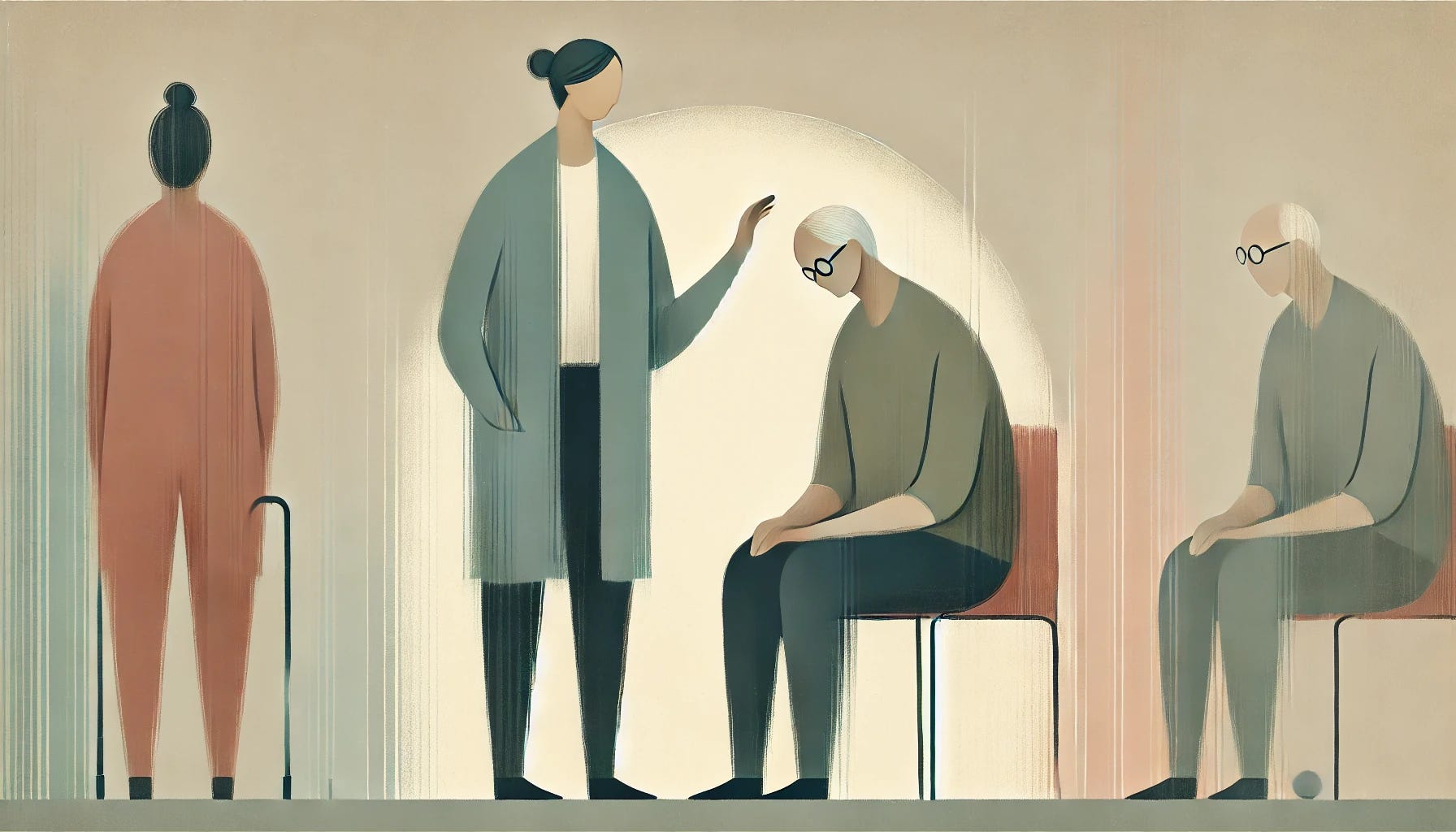
Most caregivers are trying to do the right thing. They are patient. They explain. They guide. They try to help. And still, situations become difficult. There is resistance. Frustration. Misunderstanding.
Not because they are doing something wrong on purpose - but because the strategies they use no longer match how the brain works in dementia.
What Is Happening in the Person
As dementia progresses, the brain changes in ways that are not always visible:
Processing becomes slower
Understanding becomes less precise
The ability to hold information decreases
Stress tolerance is reduced
This means the person cannot compensate in the same way as before. When communication becomes too demanding, the brain does not adapt. It reacts. Often through confusion, withdrawal, resistance, or agitation. These reactions are not intentional. They are responses to overload.
Why This Becomes Difficult
Most communication strategies are built for a healthy brain. They assume that the person can follow explanations, remember instructions, and adjust behavior. In dementia, these assumptions no longer hold.
So when we try harder using the same strategies, we often make the situation more difficult. This is why well-intended communication can lead to more resistance.
The Most Common Mistakes
These mistakes are extremely common - and completely understandable.
1. Explaining Too Much
When something doesn’t work, we often try to explain more. We need to go now because it’s late and you haven’t eaten yet. For the person, this becomes too much information. The result: overload, confusion, resistance.
What helps instead: Let’s go eat.
2. Repeating Too Quickly
When there is no response, we repeat. Often immediately. Put your arm in... put your arm in... come on, your arm... This creates pressure. The person has not had time to process the first message.
What helps instead: Say it once. Wait.
3. Asking Too Many Questions
Questions require processing and decision-making. Do you want to shower now? Should we go to the bathroom? For many people with dementia, this is difficult. It can lead to hesitation, no responses, or withdrawal.
What helps instead: Guide instead of asking. Let’s go to the bathroom.
4. Trying to Correct or Convince
When something is wrong, we try to fix it. No, that’s not correct. You already ate. This often leads to frustration, argument, or escalation. Because the person is not able to update their understanding in that moment.
What helps instead: Acknowledge the feeling - not the facts.
5. Moving Too Fast
Care situations often have a natural tempo. But for the person, this tempo is too high. We move quickly, give instructions while acting, and expect immediate cooperation. This creates overload.
What helps instead: Slow the entire situation down.
6. Talking While Doing
We often speak while performing tasks. This creates two streams of information: verbal and physical. For the person, this can be too much.
What helps instead: Separate action and communication. Pause, speak, act.
7. Continuing Despite Resistance
When resistance appears, we often continue. Because the task needs to be done. But continuing increases stress. Which increases resistance. Which can lead to escalation.
What helps instead: Pause. Reset the situation.
What These Mistakes Have in Common
They all increase cognitive load, pressure, and speed. And they decrease understanding, sense of control, and ability to participate.
What Helps Instead
Effective communication in dementia is not about doing more. It is about doing less - but differently.
Reduce: fewer words, fewer steps, fewer demands
Slow down: more pauses, more time, lower tempo
Support: guide actions, use the environment, stay present
A Practical Example
Situation: Brushing teeth. Instead of Go brush your teeth now, you need to get ready for bed, try going to the bathroom, picking up the toothbrush, handing it over, and saying Brush your teeth. Then wait.
Why This Matters
Many challenging situations in dementia care are not caused by the person. They are created in the interaction. When we change how we communicate, we often change the outcome. This is why communication is one of the most powerful tools we have in dementia care - especially before considering more invasive measures.
Summary
Common communication strategies often increase difficulty.
More explanation, speed, and pressure lead to overload.
Resistance is often created in the interaction.
Reducing demands improves participation.
Small adjustments have large effects.
So far, we have focused on understanding. In the next articles, we move into something more concrete: What to do - step by step - in real-life situations.
This article is part of a series on Dementia Communication That Works.
The series explores how changes in attention, understanding, and stress tolerance affect everyday situations — and how small adjustments in communication can reduce resistance, confusion, and distress.
Further articles in this series focus on practical “what to do” approaches in real-life situations.