
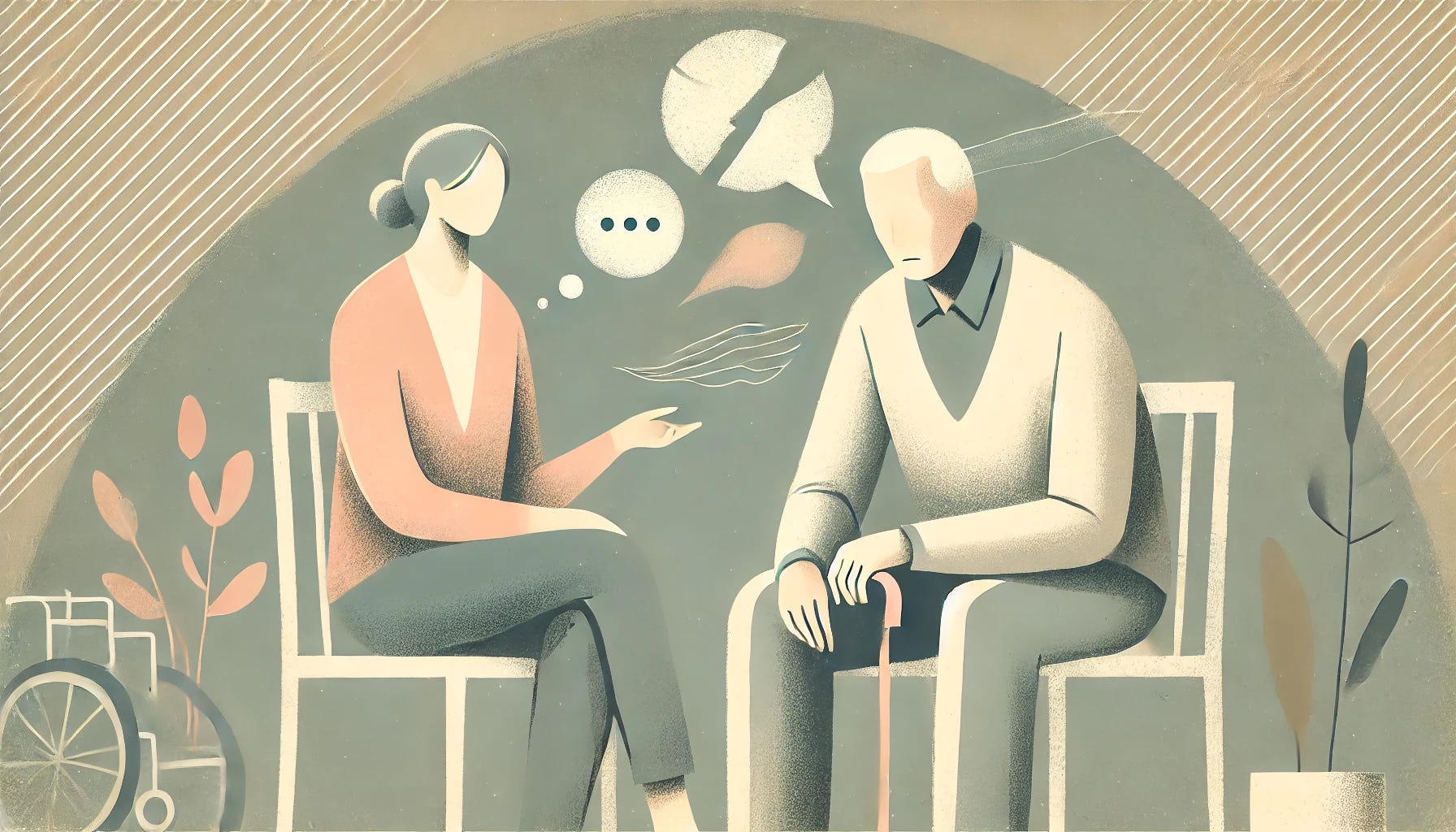
Why Conversations Stop Working in Dementia
When words are no longer enough

Clinical Observation
“We used to talk normally.”
“Now it feels like we don’t understand each other.”
“It’s like the conversation just disappears.”
This can feel like a gradual loss - or sometimes a sudden shift.
What Is Happening in the Brain
Conversation requires multiple functions working together: language processing, attention, memory, social interpretation, and processing speed. In dementia, these functions are affected unevenly. This means the person may hear the words but not process them fully, or not fast enough to respond. At the same time, the ability to follow longer sentences, interpret tone and intention, and stay engaged becomes reduced.
Why Standard Responses Often Fail
Common reactions include speaking more clearly, repeating information, or adding more explanation. But this often increases complexity. More words = more processing demand. More demand = more breakdown. The conversation becomes harder, not easier.
A Different Way to Understand Communication Breakdown
The issue is not only language. It is capacity. The brain can no longer handle speed, amount of information, or complexity.
Relational Adjustment
Instead of focusing on what to say, focus on how the interaction is structured. Because timing, pace, and simplicity now determine what works.
Practical Direction
Helpful adjustments may include slowing down communication, using shorter phrases, and allowing more time for response. But applying this consistently in real situations requires a clear approach.
What Actually Helps
If you deal with communication challenges daily, this is one of the most important areas to understand.
In the full guide, you will learn:
• How to communicate when words no longer work
• How to create connection beyond language
• How to reduce frustration in everyday interaction
Explore the Communication Guide | See diagnosis-specific strategies for Alzheimer’s, FTD, and Lewy Body Dementia